
Imagine a classroom where students never sit through a lecture. Instead, they arrive already familiar with the day’s concepts — having watched a short video lesson the night before — and spend the entire class period debating ideas, solving real problems, and working side by side with their peers. The teacher moves between groups, coaching, questioning, and giving instant feedback. This is the flipped classroom model, one of the most discussed and researched innovations in modern education. In this guide, we explore the flipped classroom model benefits for student learning, how the model works, the research behind it, the challenges it faces, and a practical roadmap for teachers who want to try it.
What Is the Flipped Classroom Model?
The flipped classroom model is an instructional approach that reverses the traditional sequence of learning. In a conventional classroom, new content is delivered through in-class lectures, and students apply what they learned later through homework. The flipped model turns this arrangement upside down: direct instruction moves to the individual learning space (usually before class, via videos, readings, or interactive modules), while homework-style application moves into the classroom, where the teacher is present to guide it.
The idea gained momentum in 2007 when chemistry teachers Jonathan Bergmann and Aaron Sams at Woodland Park High School in Colorado began recording their lectures so absent students could catch up. They quickly noticed something unexpected: students who watched the recordings started pausing, rewinding, and rewatching explanations at their own pace — something impossible in a live lecture. Around the same time, Salman Khan’s Khan Academy videos were demonstrating that short, focused video lessons could reach millions of learners. Together, these experiments sparked a global movement to rethink how classroom time is used.
At its core, the flipped classroom model rests on a simple insight: the scarcest resource in education is not content — content is abundant online — but the teacher’s time and attention. By offloading the one-way transmission of information to pre-class materials, teachers can devote the valuable in-class hours to the things that need a human being most: discussion, mentoring, feedback, and collaboration.
How the Flipped Classroom Model Works
A well-designed flipped classroom typically runs in three phases. Understanding each phase is the key to understanding why the flipped classroom model benefits for student learning are so widely reported.
Phase 1: Pre-Class Learning (Before the Bell Rings)
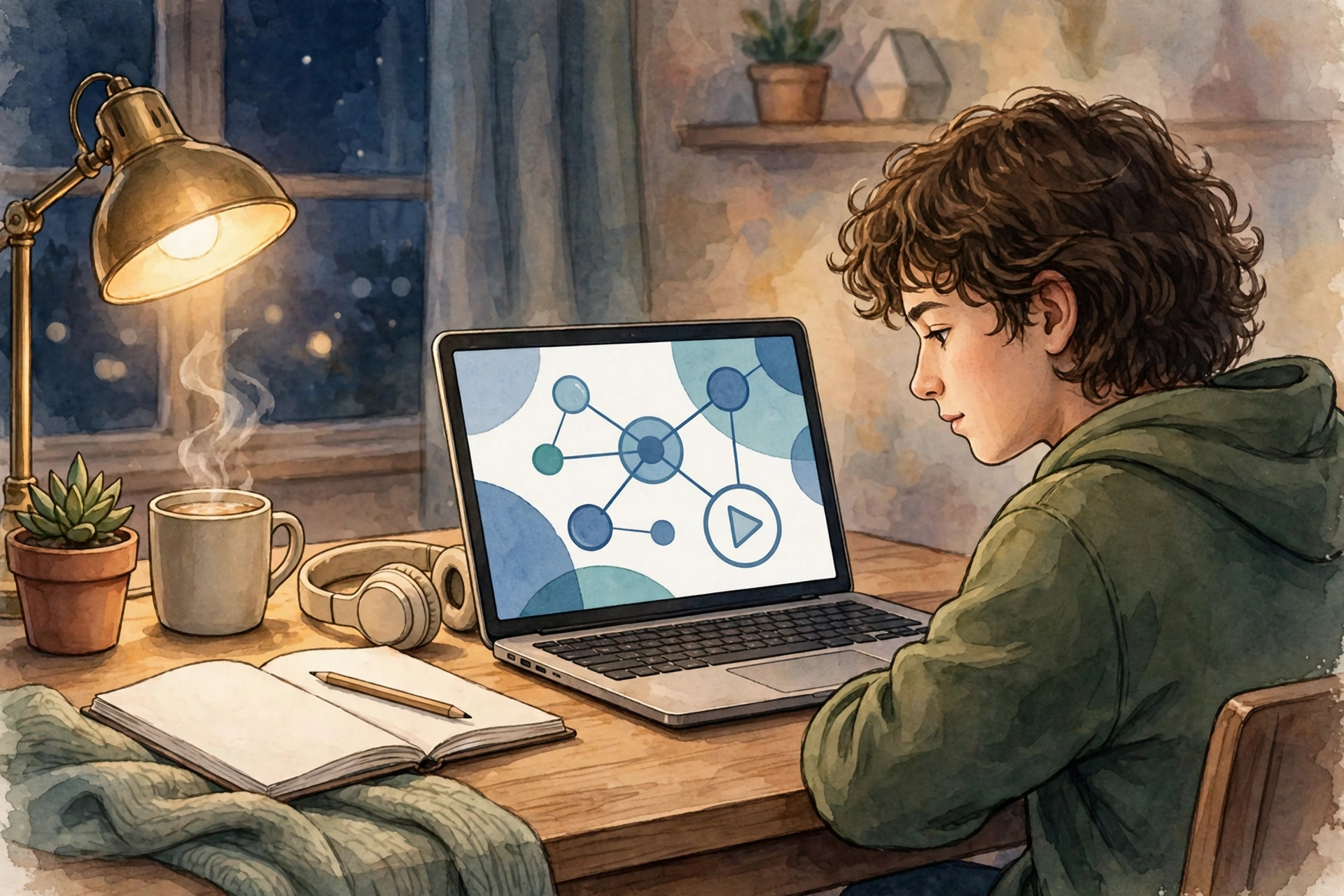
Before class, students engage with direct instruction on their own. This usually means watching a short video lesson — ideally between five and ten minutes — or reading an assigned chapter, working through an interactive simulation, or completing a guided online module. The best pre-class materials are focused on a single concept or skill, use clear visuals and examples, and end with a quick check for understanding, such as a two- or three-question quiz.
This phase gives students control over the pace of instruction. A learner who needs to hear an explanation three times can replay the video without embarrassment; a fast learner can watch at double speed and move on. Research on flipped instruction consistently finds that this self-pacing is one of the most valued features among students.
Phase 2: In-Class Activities (Where the Magic Happens)
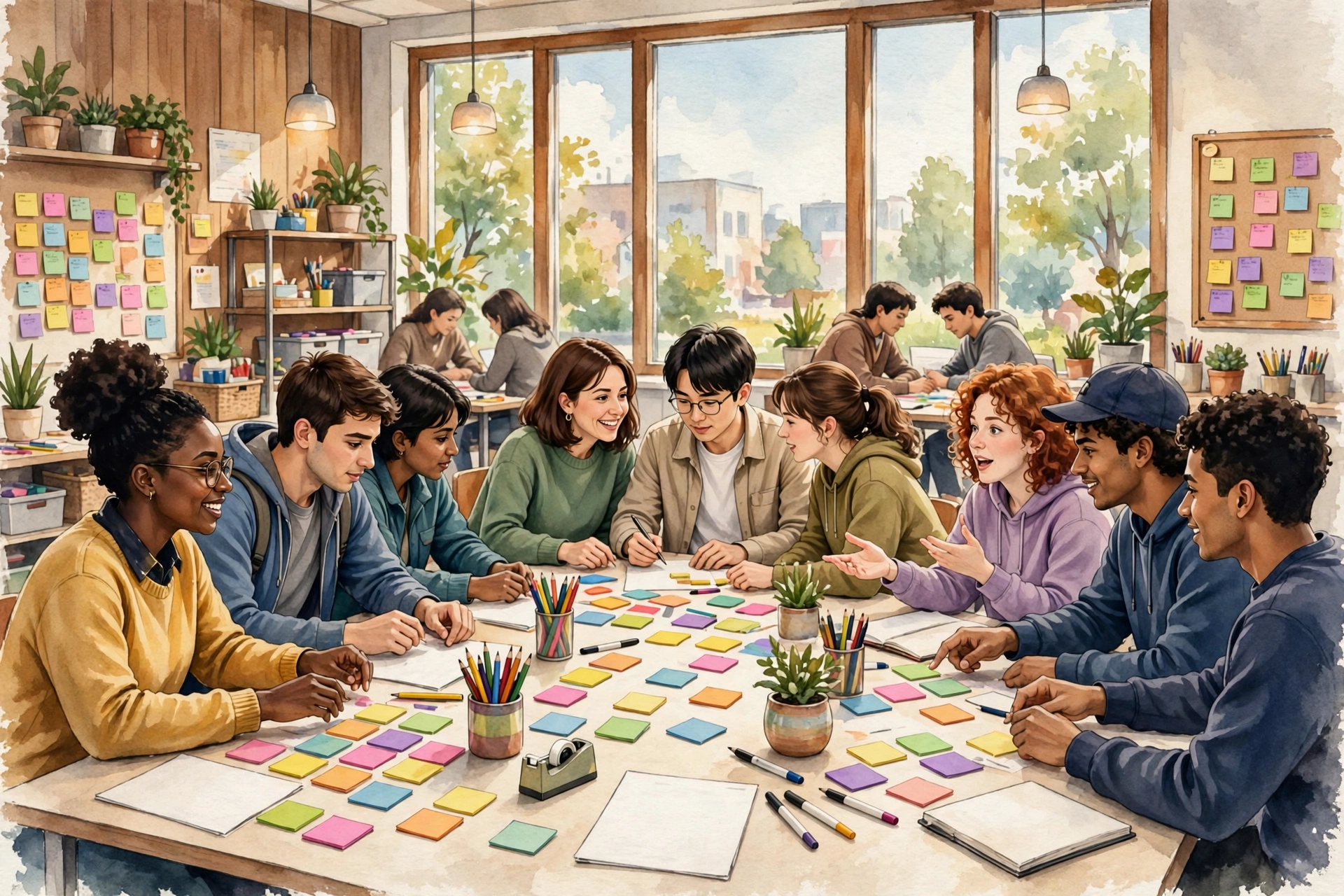
Class time, freed from lecturing, is restructured around active learning. Students tackle problem sets, case studies, debates, lab work, peer teaching, and group projects — all while the teacher circulates, observes, and intervenes exactly where help is needed. Because the teacher can see students’ thinking in real time, misconceptions can be corrected immediately instead of surfacing days later on a graded assignment.
Many teachers begin class with a brief review of the pre-class material, often using a formative quiz or a short discussion to surface questions. The bulk of the period is then devoted to application: working through the kinds of tasks that traditionally became homework. The crucial difference is that students are no longer doing the hardest part of learning alone at the kitchen table — they are doing it with peers and an expert at hand.
Phase 3: Post-Class Consolidation (After the Lesson)
After class, students reflect, extend, and consolidate. This might involve reflective journaling, a discussion-board post, a small extension project, or spaced retrieval practice on the concepts covered. Some teachers use this phase for peer feedback on projects or for short formative assessments that feed into the next day’s planning. The cycle then repeats: preview, apply, consolidate.
The Key Benefits of the Flipped Classroom Model
Decades of studies and multiple meta-analyses have examined the flipped classroom model benefits for student learning across subjects, grade levels, and countries. While results vary with implementation quality, the overall picture is consistently positive. Here are the benefits that show up most reliably.
1. Improved Academic Performance
The most frequently cited benefit is better learning outcomes. A 2026 review of research studies and meta-analyses conducted between 2013 and 2024 found that flipped classrooms generally lead to better academic performance, higher engagement, and more positive learning attitudes than traditional teaching. Students in flipped classrooms often achieve slightly higher grades and demonstrate stronger understanding of complex topics.
Concrete examples keep emerging. In a three-year study of neurosurgery teaching, students taught with the flipped classroom model answered significantly more final-exam questions correctly than their lecture-taught peers — 19.2 versus 18.2 on average — with the same instructors and a shared examination. A quasi-experimental study of flipped science instruction in K-12 classrooms found significantly higher learning gains in the flipped group, particularly among students who actually engaged with the pre-class materials. The pattern is clear: when students do the pre-work and class time is used for active learning, scores go up.
2. Deeper Engagement and Active Learning
Traditional lectures put students in a passive role; the flipped model puts them to work. Class time filled with discussions, problem-solving, and hands-on activities generates the kind of cognitive engagement that lectures rarely achieve. Researchers report improvements not just in test scores but in motivation, active participation, and higher-order thinking.
Peer interaction is a major driver. When students explain concepts to one another during in-class activities, both the explainer and the listener benefit — teaching a concept is one of the most powerful ways to consolidate understanding. The flipped classroom naturally creates far more of these peer-teaching moments than a lecture hall ever could.
3. Personalized, Self-Paced Learning
Perhaps the most transformative of the flipped classroom model benefits for student learning is personalization. In a live lecture, everyone moves at the speaker’s pace. In a flipped model, each student controls the pre-class phase: pausing to take notes, replaying a tricky explanation, or speeding through familiar ground.
This flexibility is especially powerful for diverse classrooms. Struggling students get the repetition they need without stigma; advanced students are not held back. English-language learners can replay content and look up vocabulary privately. Students with attention difficulties can chunk the material into manageable pieces. And in class, the teacher’s freed-up time can be spent exactly where it is needed most — with the students who need the most support.
4. Stronger Critical Thinking and Problem-Solving Skills
Lower-order cognitive work — remembering facts and understanding basic concepts — happens before class. That means the precious in-class hours can be devoted to higher-order work: applying, analyzing, evaluating, and creating. Instead of listening to someone else solve problems, students solve them themselves, with coaching.
Studies on flipped learning consistently report gains in problem-solving skills, collaborative learning attitudes, and self-regulated learning strategies. The hybrid flipped classroom combined with case-based learning, studied in a 2026 Frontiers in Medicine paper, was found to improve research literacy, academic writing skills, and professional competencies — exactly the transferable skills employers say they want.
5. More Meaningful Teacher-Student Interaction
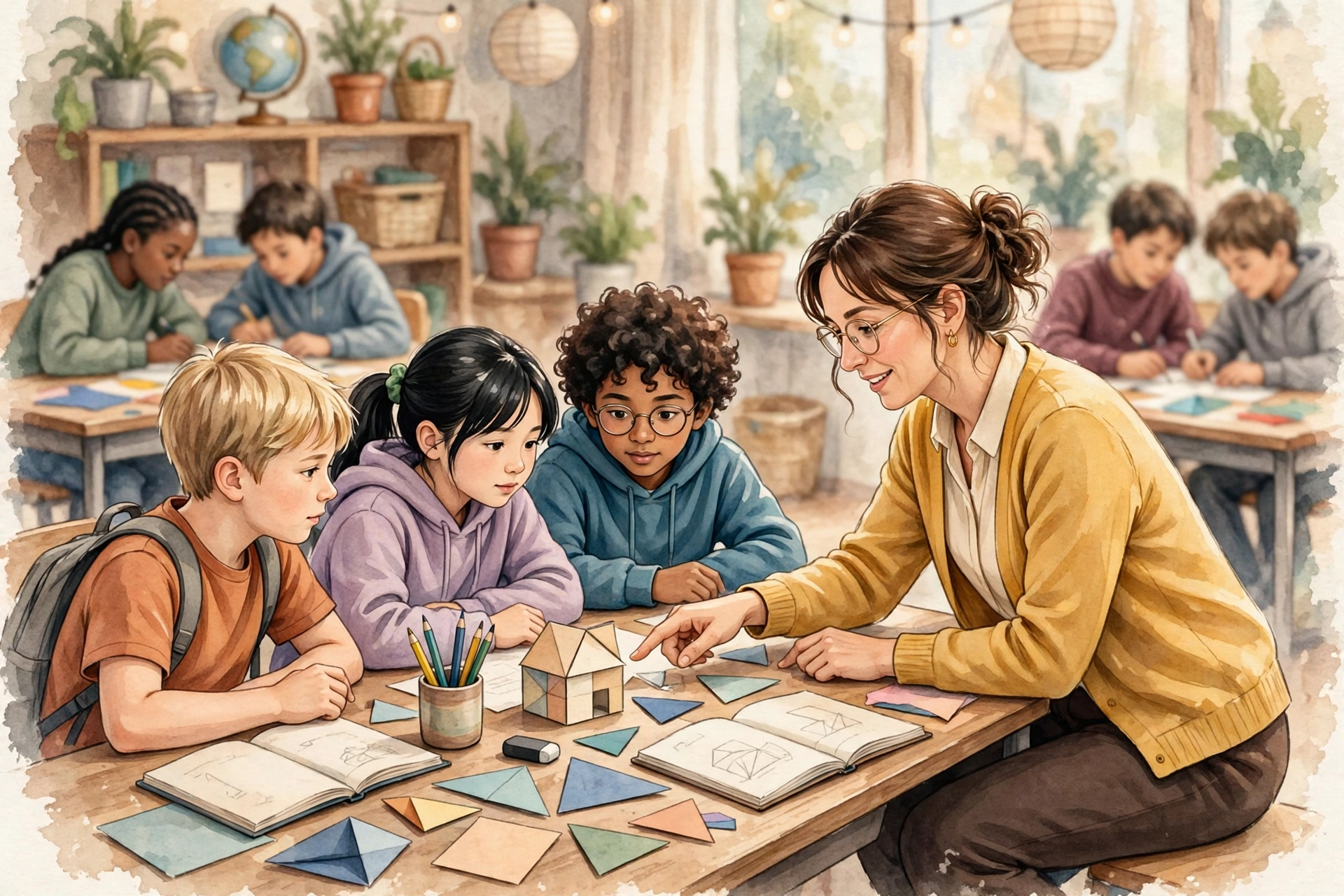
In a traditional classroom, the teacher speaks and students listen — interaction is limited. In a flipped classroom, the teacher spends the period in conversation: answering questions, probing reasoning, and giving one-on-one feedback. Teachers frequently report that flipping allows them to know their students better as learners, because they actually watch them think.
This shift also changes the classroom dynamic for the better. Quiet students who rarely raise their hands in a lecture often participate more readily in small-group work. And because the teacher sees misconceptions as they form, instruction becomes more responsive — the class can pivot in real time rather than waiting for a test to reveal problems.
6. Better Use of Class Time
Consider how much traditional class time goes to logistics: taking attendance, distributing materials, reviewing homework, and lecturing. Flipping reclaims that time. When direct instruction happens before class, nearly the entire period can be spent on learning activities that require the teacher’s presence. Even a modest flip — moving a 20-minute lecture to video — recovers a full period of active learning every week.
Flipped Classroom vs. Traditional Teaching
To see the contrast clearly, it helps to line the two approaches up side by side.
- Content delivery: In traditional teaching, the teacher delivers new content in class and students practice at home. In the flipped model, students encounter new content before class and practice in class.
- Student role: Traditional classrooms cast students as passive receivers; flipped classrooms cast them as active participants and collaborators.
- Pace: Traditional lectures move at one pace for everyone; flipped pre-class work adapts to each learner’s pace.
- Teacher role: The traditional teacher is a presenter and evaluator; the flipped teacher is a coach, facilitator, and guide.
- Homework: In traditional classrooms, homework is solitary practice of new material — often the hardest part of learning, done without help. In flipped classrooms, the hardest practice happens in class, with support.
- Feedback: Traditional feedback arrives after grading, often days later. Flipped classrooms provide immediate, in-the-moment feedback during class activities.
Neither approach is automatically superior in every situation. Direct lecture remains efficient for orienting large groups or delivering announcements. But for deep learning — the kind that requires practice, discussion, and feedback — the flipped arrangement has a structural advantage, because it matches each type of work to the setting where it works best.
Common Challenges and How to Overcome Them
Honest discussion of the flipped classroom model benefits for student learning must include its challenges. Research reviews consistently note that results are not always positive — poor implementation can erase the benefits entirely. Here are the most common obstacles and proven ways around them.
Challenge 1: Students Skip the Pre-Class Work
This is the number-one reason flipped classrooms fail. If students arrive without having watched the video or done the reading, the in-class activities collapse. The 2026 K-12 flipped science study found that completion of the pre-class activity was the critical factor: students who engaged with the materials showed the most significant gains.
- Keep videos short. Aim for five to ten minutes. Engagement drops sharply with longer videos, and one study’s third-year redesign cut every video to under six minutes based on attention research.
- Make pre-work accountable. Short online quizzes, entrance tickets, or a two-question warm-up at the start of class create gentle accountability.
- Make it worth doing. Explicitly connect pre-class work to the day’s activities so students see the payoff. When class time genuinely depends on the preview, compliance rises.
- Provide alternatives. Not every student has reliable internet at home. Offer downloadable videos, printed transcripts, library viewing stations, or in-school preview time.
Challenge 2: Access and Equity
The flipped model assumes students can access digital materials outside class — an assumption that does not hold for every family. Schools have addressed this by lending devices, creating offline options, designating before- and after-school lab time for preview work, and partnering with community libraries. Equity planning should come before the first flip, not after problems appear.
Challenge 3: Teacher Workload
Creating quality videos and redesigning lessons is genuinely demanding, especially the first time. Teachers new to flipping should know the workload front-loads: the first year is heavy, but materials are reusable and refinable in later years.
- Start small. Flip one unit or one day per week rather than the entire course.
- Reuse before you create. High-quality videos and simulations already exist for most topics; curating is faster than producing.
- Collaborate. Teams of teachers can split video production and share in-class activity designs.
- Iterate. The neurosurgery study improved its design each year based on student feedback and engagement analytics — flipping gets better with revision.
Challenge 4: Using Class Time Poorly
Some flipped classrooms fail because teachers move the lecture to video but then use class time for more lecturing — or for unstructured free time. The research is unambiguous: the benefits come from what happens in class. If freed class time is not filled with genuinely active, well-structured learning tasks, the flip is just homework by another name. Planning in-class activities is where flipped teaching succeeds or fails.
How to Implement a Flipped Classroom: A Step-by-Step Guide
Ready to try flipping? Here is a practical roadmap distilled from successful implementations.
Step 1: Choose One Unit to Flip
Pick a topic with clear, stable content — something you have taught before and know well. A single unit gives you room to learn the workflow without overwhelming yourself or your students.
Step 2: Define the Learning Objectives
Write down exactly what students should know and be able to do by the end of the unit. Every video, quiz, and activity should trace back to these objectives. This clarity is what separates a purposeful flip from a random one.
Step 3: Create or Curate Pre-Class Materials
Record short videos (a phone and a whiteboard are enough to start), or curate existing high-quality videos, readings, or simulations. Add guiding questions or a brief quiz to each one. Include transcripts or captions for accessibility.
Step 4: Design In-Class Activities
Plan activities that require the pre-class knowledge: problem sets, debates, case analyses, experiments, or peer-teaching rounds. Build in moments where you check understanding and adjust. Prepare extension tasks for fast finishers.
Step 5: Communicate the Change
Students (and parents) need to understand why the routine is changing and what is expected. Explain the rationale, show them how to use the materials, and set clear expectations for pre-class preparation. Early buy-in prevents early resistance.
Step 6: Launch, Observe, and Adjust
Watch completion rates, quiz results, and classroom energy. Ask students for feedback after the first week. Tweak video length, activity difficulty, and accountability mechanisms. Treat the first flip as a pilot, not a verdict.
Best Tools for the Flipped Classroom Model
Technology makes flipping practical. Here are the categories of tools teachers rely on most:
- Video creation: Screen-recording tools and simple editors let teachers produce short lessons with voiceover, annotations, and embedded questions.
- Interactive video platforms: Tools that embed quizzes inside videos and report who watched what give teachers the accountability data they need.
- Learning management systems: A central hub organizes videos, readings, quizzes, and discussion boards so students always know where to find the pre-class work.
- Formative assessment tools: Quick in-class polling and quiz apps make it easy to check understanding at the start of each session.
- Collaboration tools: Shared documents, digital whiteboards, and breakout-capable video platforms support the group work that fills flipped class time.
The specific tools matter less than how they are used. A five-minute video with a clear explanation and one good question beats a polished twenty-minute production every time.
Who Benefits Most from the Flipped Classroom?
The flipped model has been studied across nearly every level of education, and different contexts highlight different strengths.
- K-12 classrooms: Self-pacing and in-class support help diverse learners, including students who need more time with new concepts. The K-12 science research shows the multimedia, replayable nature of pre-class materials is a key driver of gains.
- Higher education: University students, with greater independence, often handle pre-class work well — and large lecture courses gain the most from converting passive seats into active workshops.
- Medical and professional training: Flipped approaches combined with case-based learning have improved clinical reasoning, practical skills, and exam performance in fields from neurosurgery to gastroenterology, where applying knowledge under guidance matters more than memorizing it.
- Corporate and adult learning: Working adults value the flexibility of self-paced preview and the efficiency of focused, collaborative sessions.
Frequently Asked Questions
Is the flipped classroom model suitable for all subjects?
The model works best for subjects with a clear body of content that can be previewed — sciences, mathematics, languages, history, and professional training all have strong evidence behind them. Highly discussion-driven subjects can also be flipped by assigning readings or provocative materials as pre-work. Subjects that depend entirely on spontaneous, in-the-moment activity are harder to flip but can still benefit from partial approaches.
Does flipping increase screen time for students?
Somewhat, but the trade-off matters: ten minutes of focused instructional video replaces thirty minutes of passive lecture, and it replaces solitary, frustrating homework with supported practice. Teachers can also assign readings, podcasts, or hands-on previews instead of video to vary the format.
How do you grade pre-class work?
Most teachers use low-stakes accountability: completion credit, short quizzes, or entrance tickets, rather than high-stakes grades. The goal is to build the habit of preparation, not to punish. Over time, as students experience how much easier class feels when they prepare, intrinsic motivation takes over.
Can you flip without making your own videos?
Absolutely. Curating existing videos, open educational resources, simulations, and readings is a legitimate — and often faster — way to start. Many successful flipped classrooms use curated materials exclusively. Creating your own videos adds a personal touch, but it is never a prerequisite.
Conclusion
The flipped classroom model benefits for student learning are real and well-documented: stronger academic performance, deeper engagement, self-paced personalization, sharper critical thinking, and richer teacher-student interaction. But the research carries a clear warning label — the benefits depend on implementation. Short, focused pre-class materials, genuine accountability, and class time truly devoted to active learning are the non-negotiables.
For educators willing to invest in that design work, flipping offers something rare in education reform: a change that does not ask for more time, more money, or more technology, but simply asks that existing time be used differently. Move the lecture to video, move the practice into the classroom, and watch what happens when the hardest part of learning finally gets the help it deserves.